Craft — Designing an AI Presentation Engine from First Principles
From manual service to scalable product — designing an AI pipeline that crafts presentations autonomously.
Craft is an AI-powered presentation engine I designed for Sharpsell.ai — transforming a manual, 13-person design service into a scalable, configuration-driven content pipeline for India's banking and insurance sector. I was the sole designer, working directly with the PM across every layer: from stakeholder mapping and entity modeling to workflow architecture and detailed UI.
The Problem
Sharpsell's presentation service was a bottleneck disguised as a product.- Every sales deck was handcrafted by an internal design team of 13 people
- Demand outpaced capacity 2:1 — deals went cold before pitches happened
- Every review cycle added ~48 hours; no amount of hiring could fix it
- The fix had to be architectural, not operational
| Metric | Before |
|---|---|
| Presentation requests/month | 40–50 |
| Real design capacity/month | 20–25 |
| Backlog per deck | ~30 days |
| Review cycles per deck | 4–5 rounds × 48hrs each |
"We weren't building a presentation tool. We were building a Design Automation Protocol — removing the need for designers to 'draw' at all for 80% of the work."
The Entity Model
Before opening Figma, I opened a blank Notion table. The most important design work on Craft wasn't visual — it was decomposing "a slide" into programmable parts a machine could handle deterministically.
Five Core Objects
- Presentation Type (P-Type) — The DNA. Instructions for how a presentation should be built: brief schema, outline structure, section guidelines, content handling heuristics. Every job starts here.
- Content Structure — The skeleton. What elements exist on a slide, how many, which are required. Pure structure — no styling, no color.
- Template — The visual identity container. Where brand lives. Many-to-many with P-Types — one brand can support multiple presentation types, and vice versa.
- Layout — The visual realization. A fully designed slide with explicit capacity attributes: "this layout fits one headline, three bullets, and one image." Binding, not suggestive.
- Element — The atomic unit. A heading, bullet, image placeholder. The currency flowing between structure and visual realization.
How the objects relate
The critical constraint: every Content Structure must have at least one matching Layout. No orphaned structures — no structural promise can go unfulfilled.
The edge case that tested the model
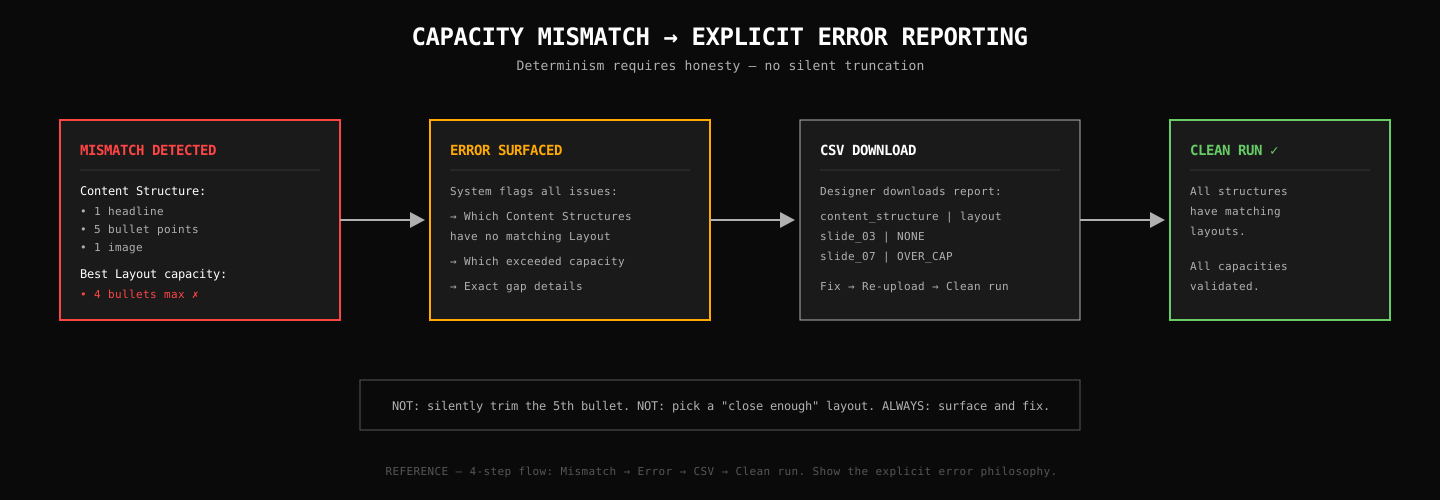
What if a Content Structure specifies five bullets but the best Layout only fits four? We chose explicit error reporting over silent truncation. The system surfaces all mismatches; the designer fixes them and re-uploads.
Determinism requires honesty: a system that makes invisible decisions erodes trust faster than one that asks you to fix something.
The 6-Step Workflow
Content creation is inherently iterative — a linear wizard breaks immediately. So I designed the pipeline as a state machine: each step reads from and writes to a shared state object, and can be re-run independently.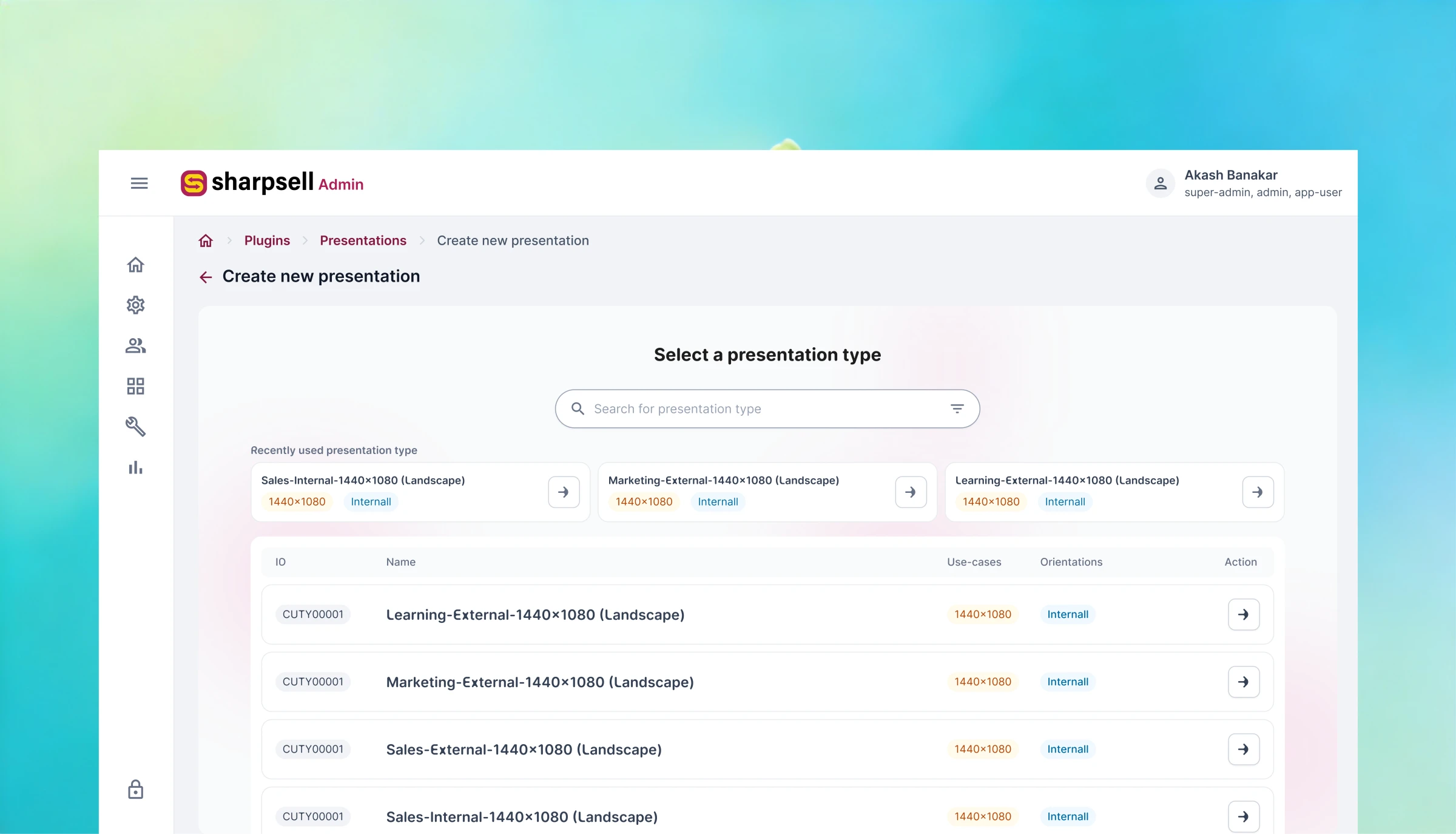 Step 1 — P-Type Selection (Manual): Writer selects the presentation type. Loads the entire knowledge base config.
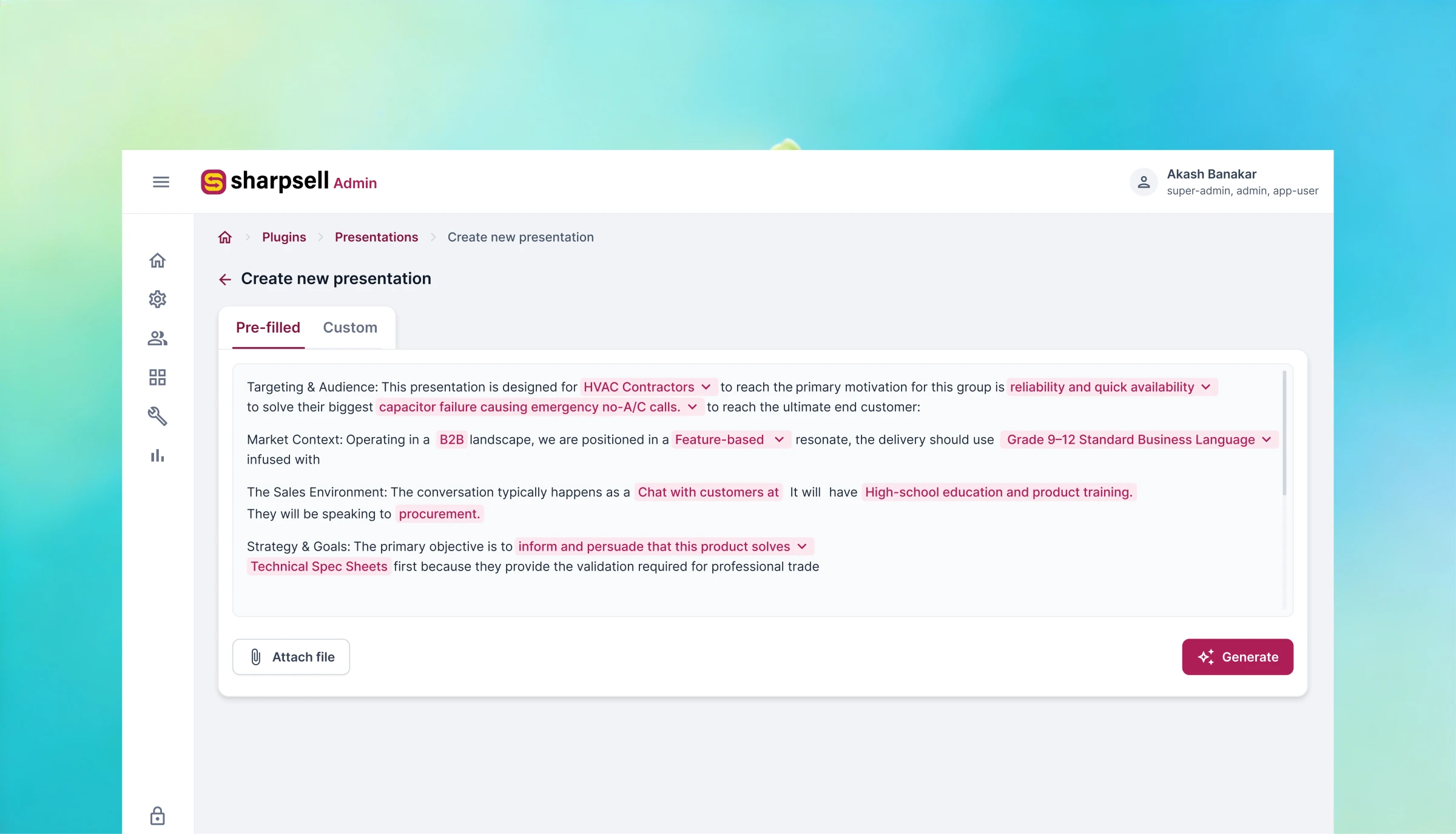 Step 2 — Brief Extraction (AI + Human): System extracts structured properties; writer fills gaps. Deterministic inputs bypass the LLM.
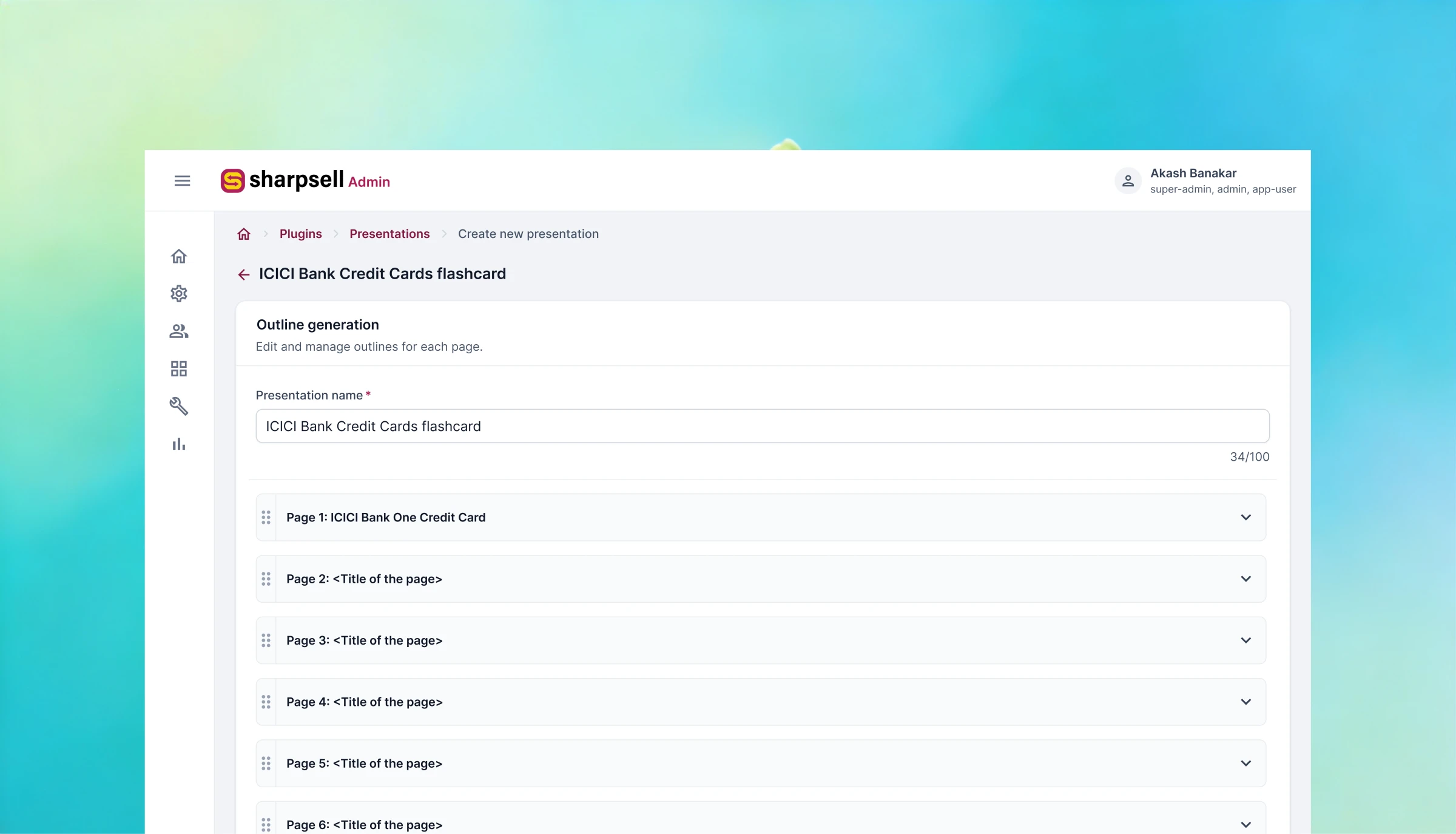 Step 3 — Coverage Analysis (AI): Maps raw content against the outline — what's covered, partial, or missing. No writing.
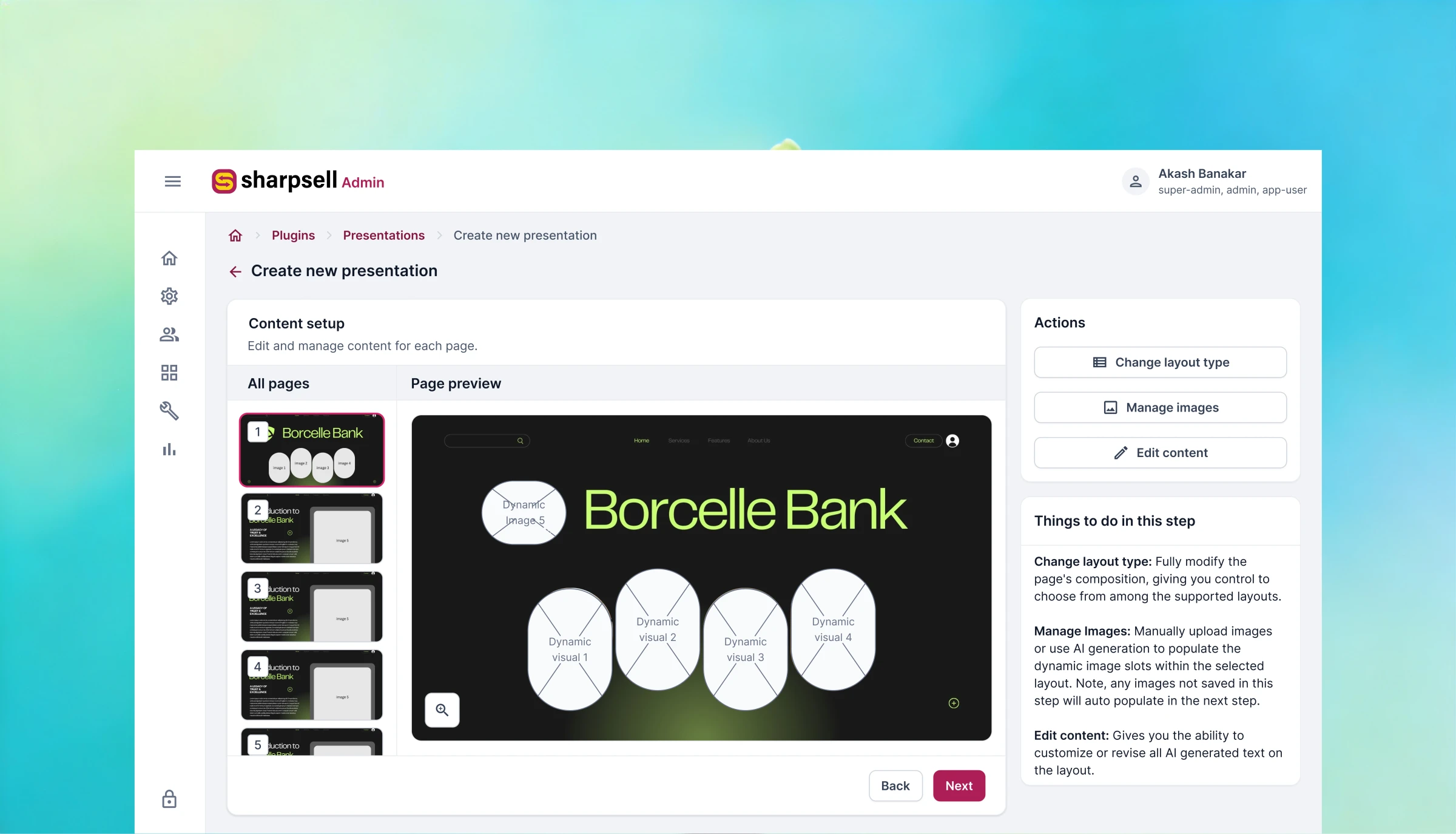 Step 4 — Content Sectioning (AI + Human): Groups text into sections via tree-view UI. AI does first pass; writer refines.
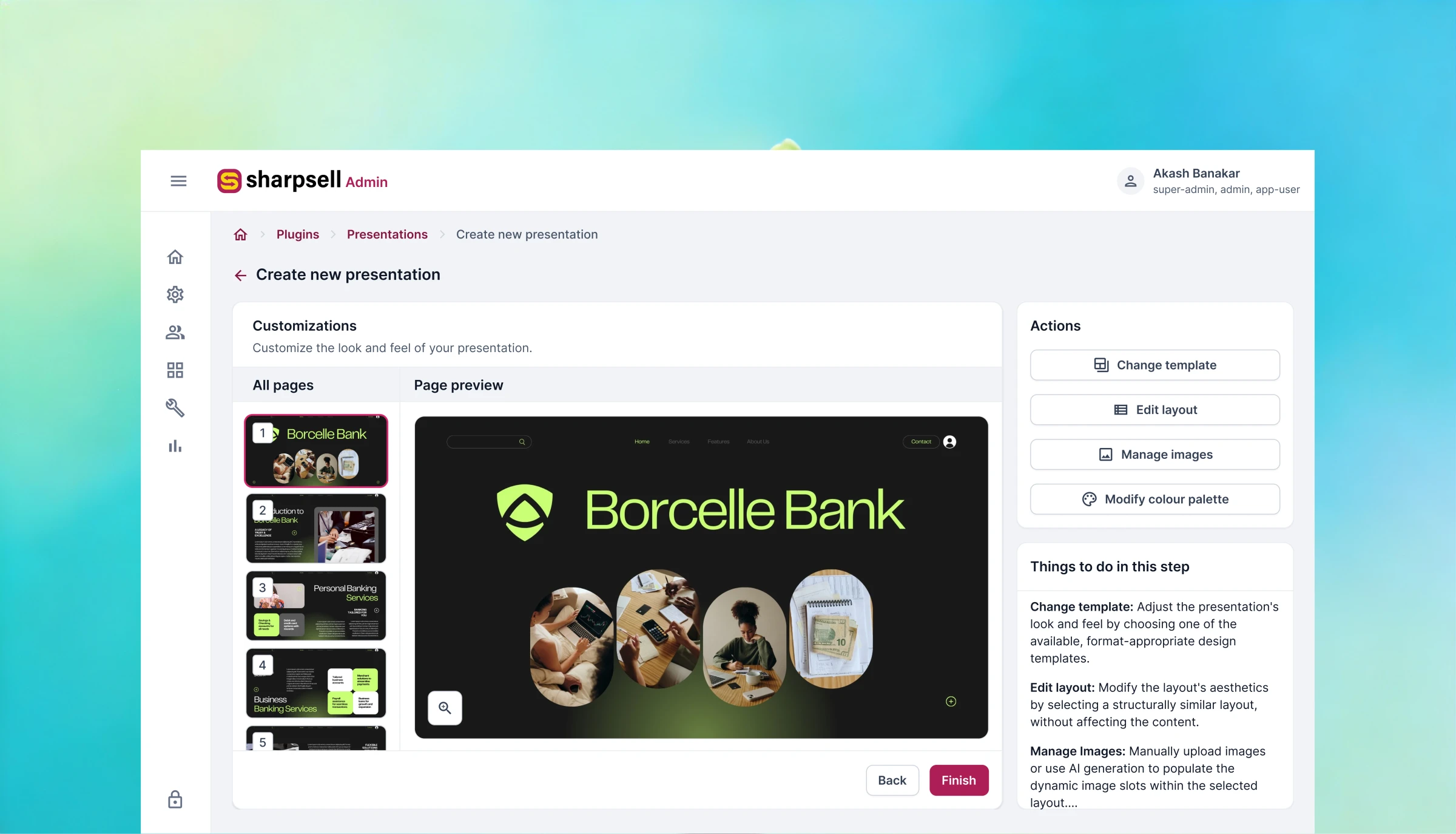 Step 5 — AI Review and Fix (Optional): Reorganizes misassigned items. Hard constraint: cannot invent factual content.
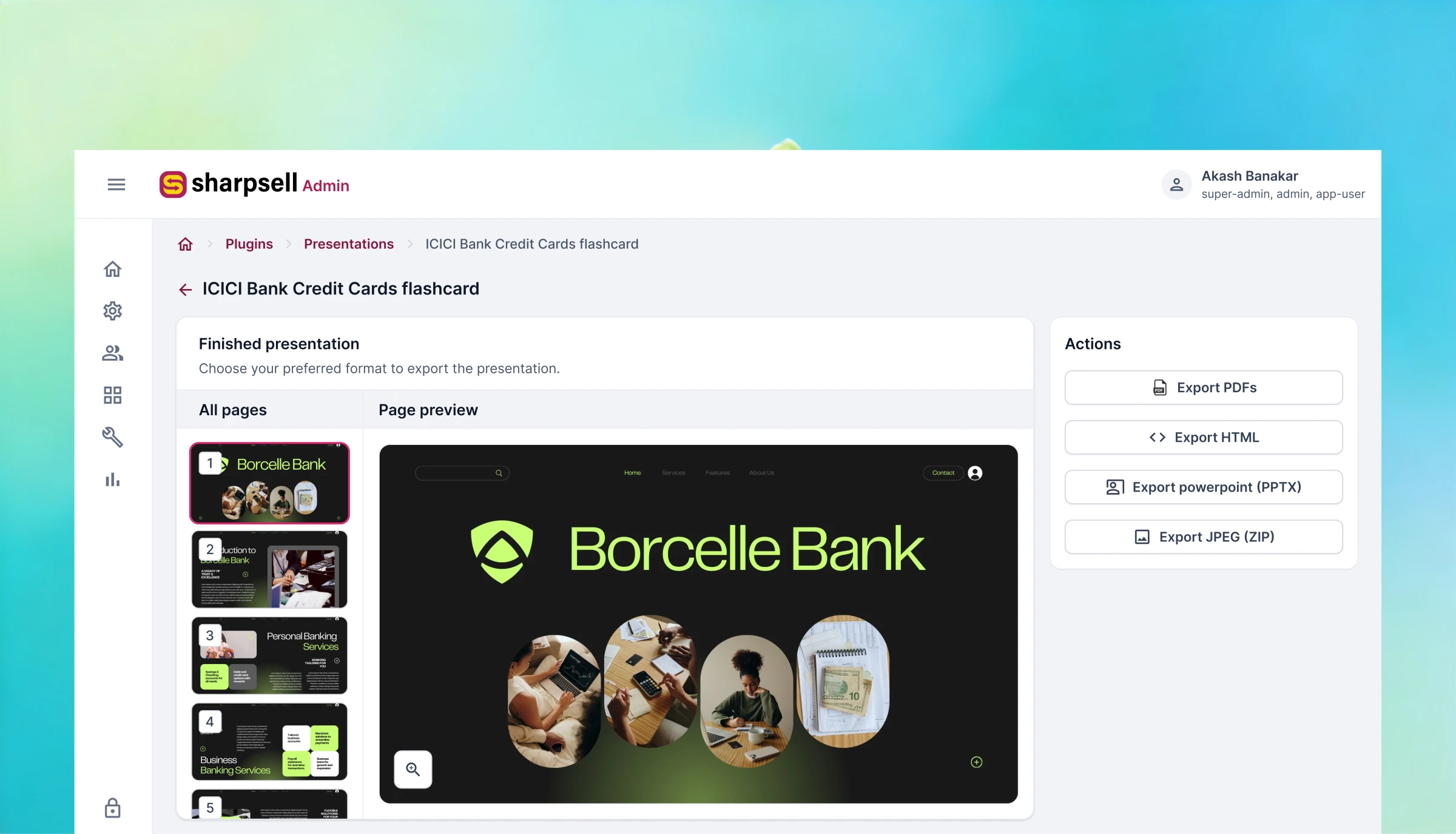 Step 6 — Copy Generation + Approval (AI + Human): Generates slide-ready copy per section guidelines; lint pass flags issues and human fixes them. Missing data surfaces as placeholder, never hallucinated. Formal approval gate before generation.
Every step has a dual gate: technical validation + explicit human sign-off. Together they create a workflow trusted in regulated environments.
Step 6 — Copy Generation + Approval (AI + Human): Generates slide-ready copy per section guidelines; lint pass flags issues and human fixes them. Missing data surfaces as placeholder, never hallucinated. Formal approval gate before generation.
Every step has a dual gate: technical validation + explicit human sign-off. Together they create a workflow trusted in regulated environments.
The Pivot
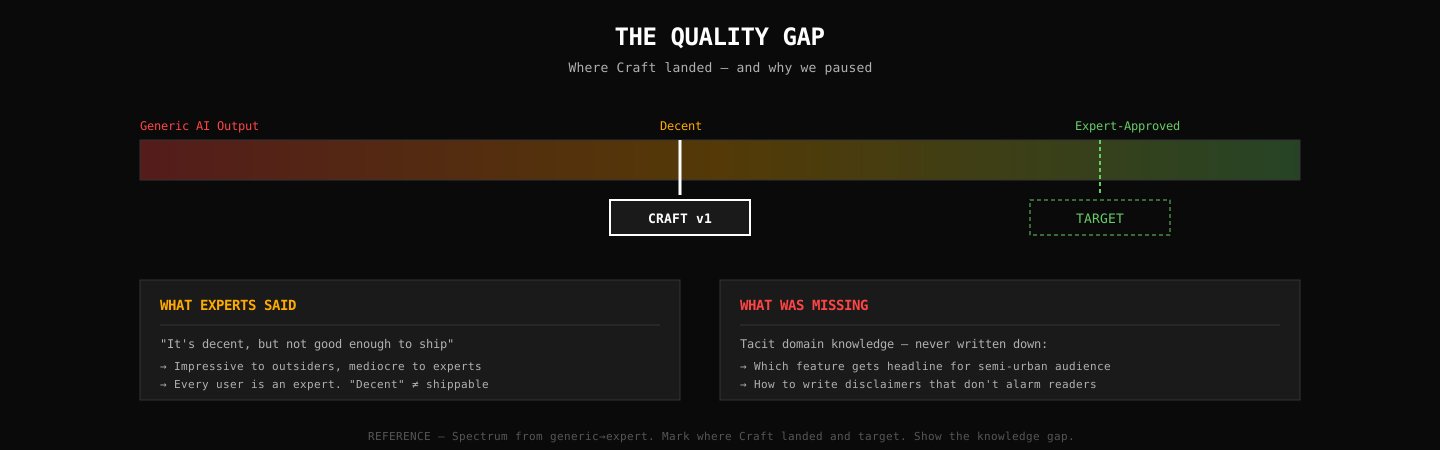
The pipeline ran end-to-end. The entity model held up. Then we showed the output to expert content writers — and they said: "Decent, but not good enough to ship."
- The AI made content decisions that needed deep domain knowledge, not LLM judgment
- Micro-decisions (which feature gets headline treatment, how to write disclaimers that don't alarm) had never been made explicit
- Being "decent at many things" doesn't pass when every user is a domain expert
The architecture was sound. The knowledge layer needed to catch up.The strategic shift: two weeks immersed with the content team — shadowing, writing content ourselves, getting it torn apart. Every extracted heuristic was structured into typed P-Type configs and fed back into the pipeline.